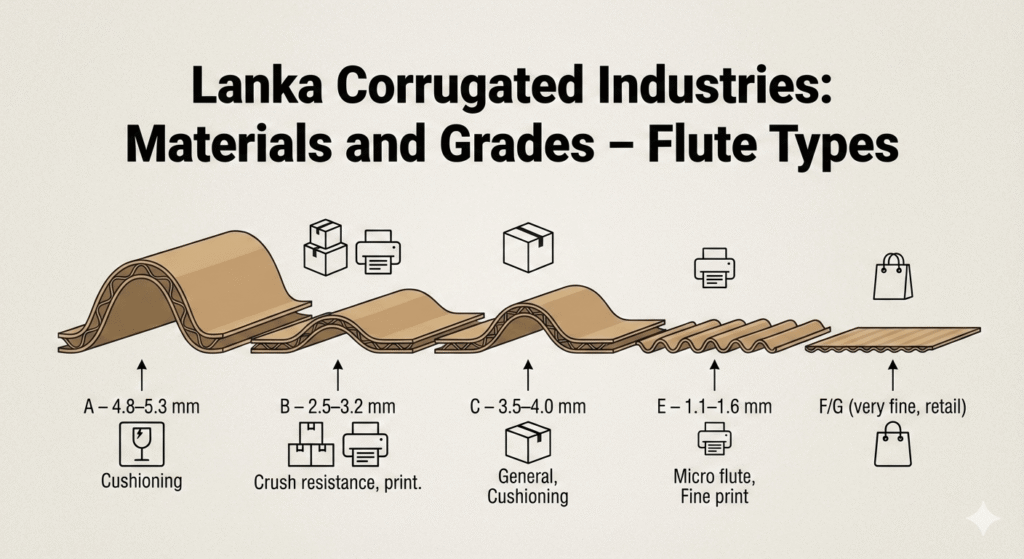
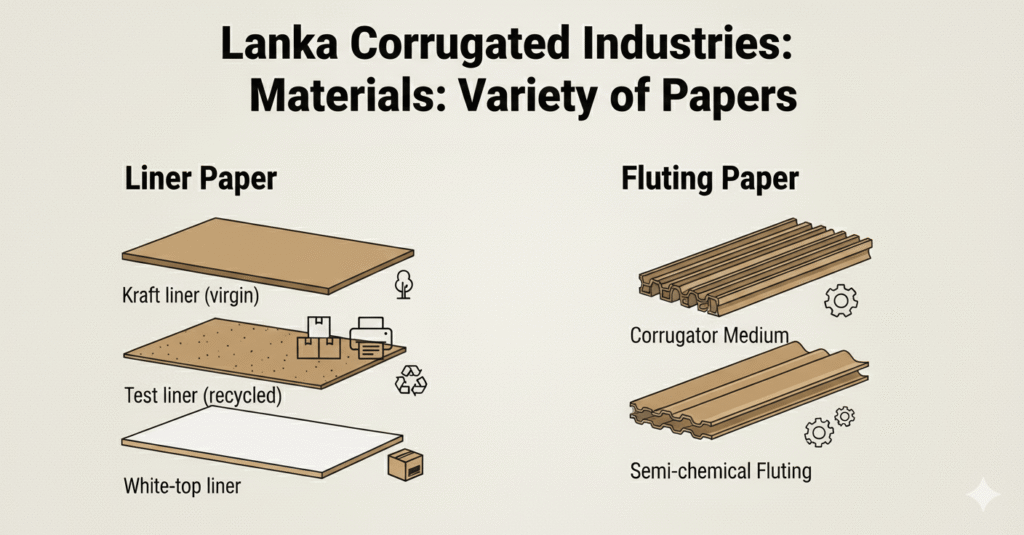
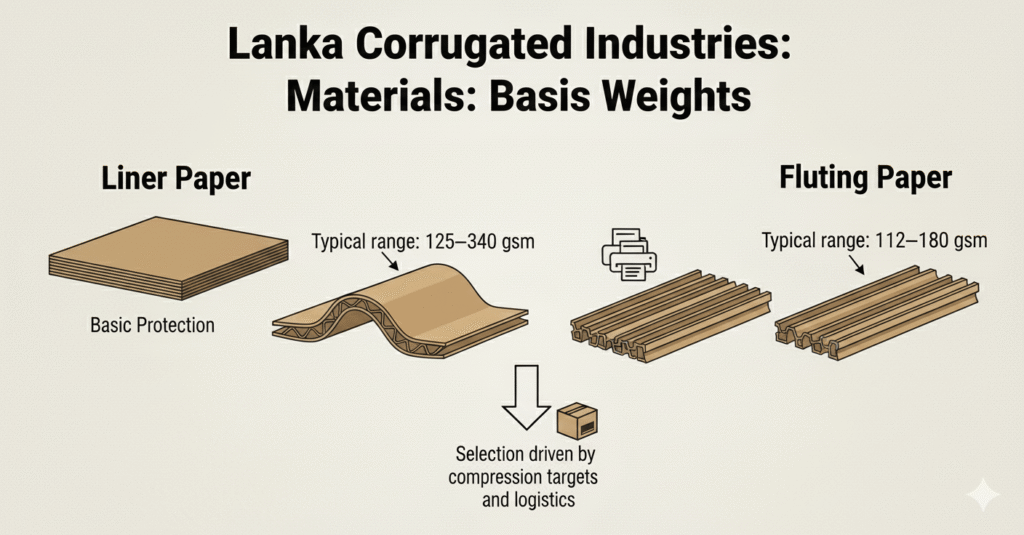
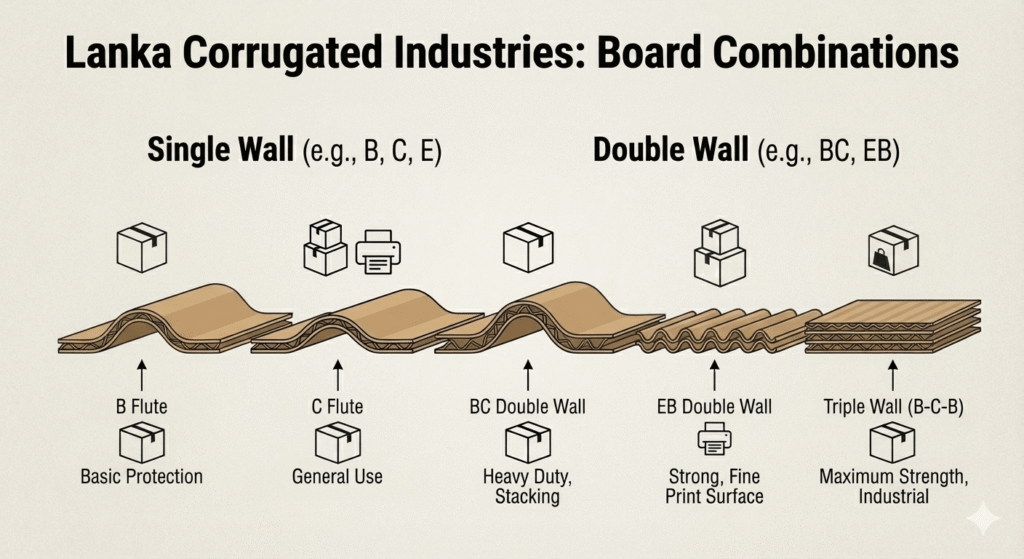
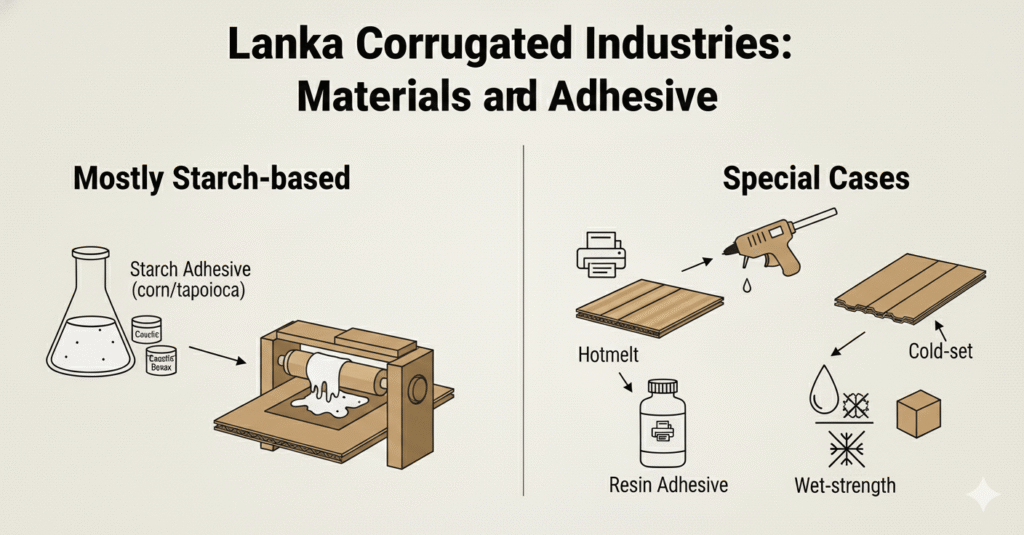
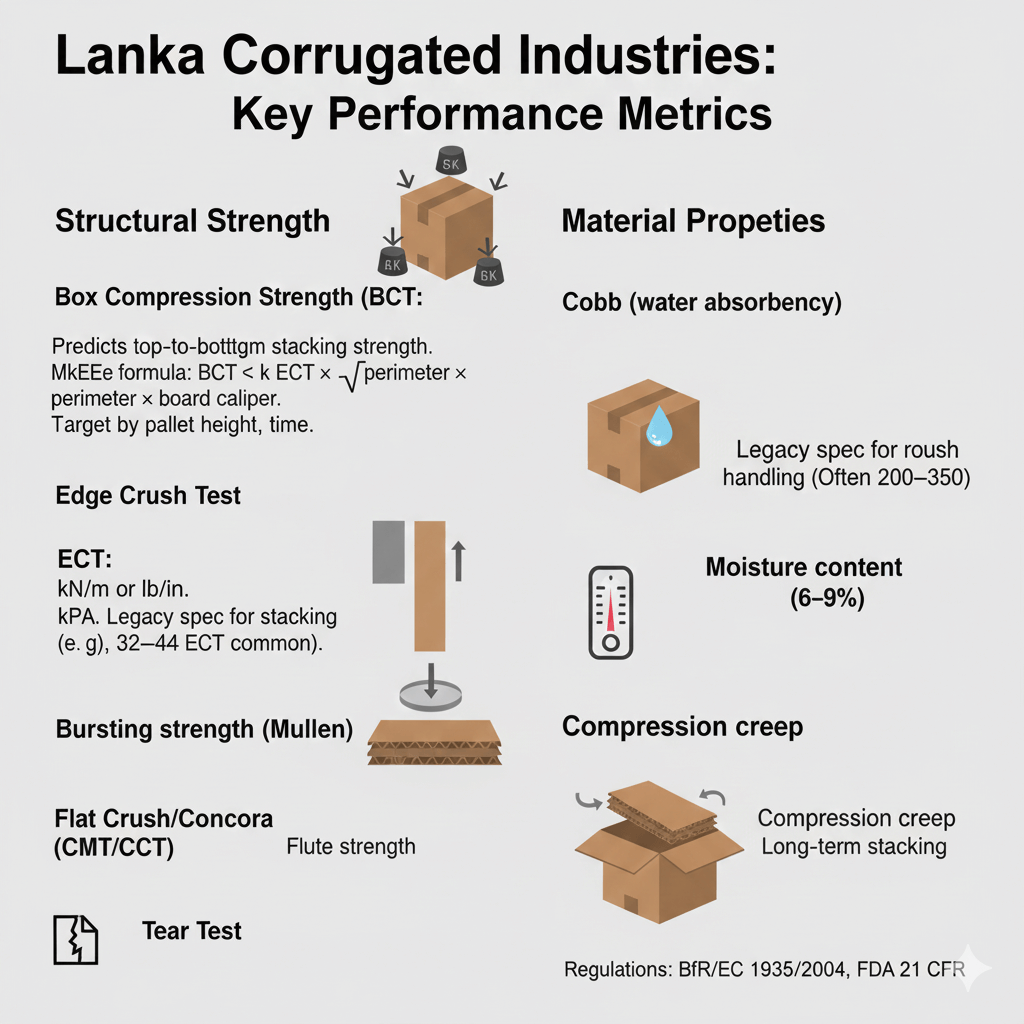
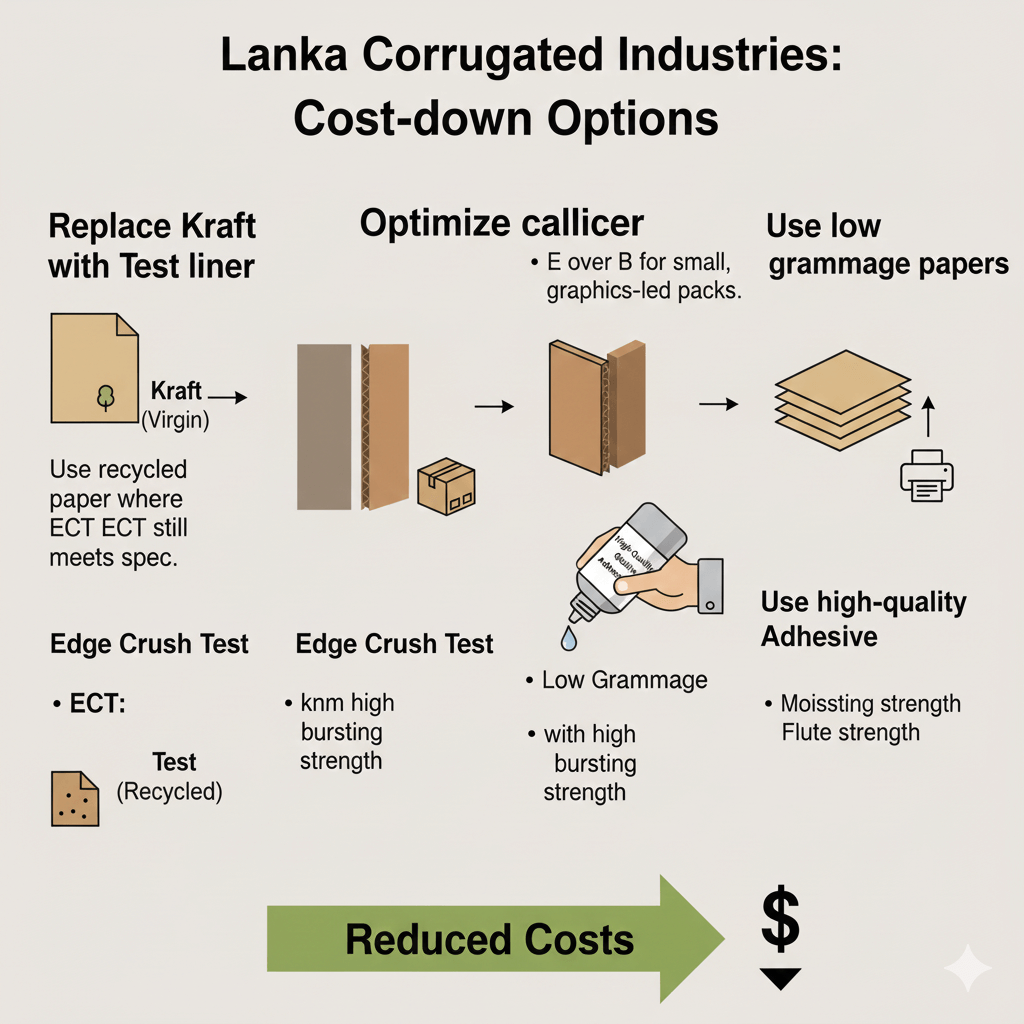
Materials and Grades Flute typesA – 4.8–5.3 mm – CushioningB – 2.5–3.2 mm – Crush resistance, printC – 3.5–4.0 mm – General, CushioningE – 1.1–1.6 mm – Micro flute, Fine print)F/G (very fine, retail) Verity of Papers: Liner Paper: Kraft liner (virgin), Test liner (recycled), White-top liner Fluting paper: Corrugator Medium, Semi-chemical Fluting Basis Weights Typical liner 125–340 gsm;Medium 112–180 gsm.Selection driven by compression targets and logistics. Board combinations Single wall (e.g., B, C, E),Double-wall (e.g., BC, EB)Triple-wall (e.g). B & C) Adhesive Mostly starch-based (corn/tapioca) with caustic/borax;Hotmelt or resin only for special cases (wet-strength, cold-set). Key Performance Metrics Box Compression Strength (BCT):Predicts top-to-bottom stacking strength.Estimated by McKee formula: BCT ≈ k × ECT × √(perimeter × board caliper). Target set by pallet height and supply chain stacking time.Edge Crush Test (ECT): kN/m or lb/in; correlates with stacking strength (e.g., 32–44 ECT common for shipper cartons).Bursting strength (Mullen): kPa; legacy spec for rough handling. Often 200–350Flat Crush/Concora (CMT/CCT): flute strength.Tear TestCobb (water absorbency),Moisture content (6–9%),Compression creep for long-term stacking. (BfR/EC 1935/2004, FDA 21 CFR). Cost-down options Replace Kraft with Test linerUse recycled paper where ECT still meets spec.Optimize caliper: E over B for small, graphics-led packs.Use low grammage papers with high bursting strengthUse of high-quality adhesive materials